Welcome to Bepa's Garden!
This blog is about organic gardening, healthy eating and healthy living.
Each month I will be posting Garden To-Do Lists, Tips & Techniques, Garden Project Plans, Photos from the Garden, Recipes and Book Reviews.
I hope you enjoy reading and I hope I can inspire others to start a backyard garden!
Happy Gardening!
~Rob~

Friday, September 28, 2012

Greenhouse Plans Now Available!

Plans for the 6'-10" x 8'-0" hobby greenhouse are now available for purchase!

The plans come as a 33 page, 8-1/2" x 11" spiral bound booklet that contain:

- Full Materials List
- Full Cut Lists
- Step by Step assembly drawings
- Detail drawings for greenhouse and benches
- Templates to help cut angles
- Sources to purchase the greenhouse covering and vent opener

All the information you need to build a greenhouse for yourself!


This greenhouse design was developed out of the necessity for an inexpensive, sturdy, functional and aesthetically pleasing alternative to the aluminum and plastic panel greenhouses kits on the market today. It is easy to construct and the plans are broken down into simple steps with diagrams so that anyone can understand them and build a greenhouse for themselves.


I hope you enjoy building your greenhouse and I hope you get the pride and satisfaction of doing it yourself!

Happy Gardening!

Wednesday, September 19, 2012

Greenhouse Plans


Greenhouse plans will be available soon!


I have had a lot of interest in the greenhouse that I built and wrote about in some of my posts so I have decided to offer plans for those who are interested on building one for themselves. This is a project that I have been working on for a while and now that the gardens are winding down and fall is settling in, I can finally get back to finishing. I hope to have the plans available soon!

 
The plans will consist of:
  • A full size set of drawings with all details to build the greenhouse, including the benches and optional roof vents (which I will be adding to my greenhouse this fall).
  • An 8-1/2" x 11" spiral bound instruction manual that will include step by step instructions with assembly drawings, materials list, templates, cut list, and resource to buy all the components like the (optional) automatic vent openers and plastic covering.
If you are interested in the greenhouse plans be sure to check back soon. I will post when they are available and you can also check the website where you can download the free cold frame plans.

Saturday, September 15, 2012

September Book Review


I just finished reading another great book called "The Heirloom Life Gardener" by Jere & Emilee Gettle. It's a book about a man's passion for saving  heirloom, open pollinated seeds which turned into a mission to preserve as many varieties of heirloom seeds as possible. The author, Jerre Gettle, is co-founder of The Baker Creek Heirloom Seed Company where they sell over 1400 varieties of heirloom seeds. He also owns two other retail operations, The Petaluma Seed Bank in Petaluma California and Comstock, Ferre & Co. in Wethersfield, Connecticut.
In the book, Jere talks about how his passion for farming started at an early age, planting his first seeds at age 3. When he was 17 he started his first mail order seed company from his bedroom in Missouri, which quickly turned into a very successful business. He talks about his travels to Mexico, Thailand and other countries in search of new heirloom seeds to bring back to grow on his farm.

Jerre decided to start preserving heirloom seeds when he discovered that most of the seeds available today from big seed companies are either GMO (Genetically Modified) or Hybrid (which won't breed true and will revert back to one of it's parent types when saved). He began to realize that a lot of the old favorites were no longer available and set out to preserve as many as possible and to educate people about the importance of preserving seeds.

There is a food movement underway and more people than ever are starting to take back control over the quality of the food they put into their bodies by planting backyard gardens or buying locally from their organic farmers markets. Another step in that process is to grow heirloom varieties and save the seeds for next years garden. Heirloom varieties are open pollinated, non-GMO, non-hybrid and will grow true every time.

I highly recommend this book to anyone who is passionate about gardening, is interested in growing heirloom varieties and wants to learn more about saving seeds. This is definitely one that I will be adding to my library!


Monday, June 4, 2012

Tomatoes in the Mini-Greenhouse


The mini-greenhouses, or cold frames, have been working out extremely well as seen by the healthy tomato plants now growing inside! 


The tomato seedlings had been sitting in the greenhouse in their soil blocks waiting to be planted in the garden. I wasn't able to transplant them earlier because the weather wasn't cooperating, but they seemed to be holding up just fine. I was getting concerned because some of the plants were starting to flower early, but as you can see from the photo the soil blocks allowed the roots to grow thick without becoming pot bound and the plants were healthy despite their longer stay in the greenhouse 


 I previously had kale growing in the min-greenhouse which I planted last fall. I harvested everything, gently cultivated the soil and topped with 6" of homemade compost before planting the tomato seedlings. The mini-greenhouse has been working well, keeping in the heat and moisture during the colder nights and days, as seen by the condensation on the plastic. I am careful to monitor the temperatures so it doesn't get too hot inside. During the warmer sunny days I open the roof vents for ventilation and to allow the bees get inside to do their job.


 These tomatoes were planted on  5/13/12 and you can see how small they were when they went in. In just a few weeks they have become dark green with vigorous growth, almost ready for pruning.


The plants on the edges of the mini-greenhouse are starting to reach the roof line, but the days are getting warmer so I can either leave the vents open all the time or move the mini-greenhouse off the plants and put in plant stakes.


If you would like to build your own mini-greenhouse, the plans are available on my website for download by clicking here. I am also putting together full size greenhouse plans that will be available in both downloadable pdf form and paper print set that you can order so you can build your own inexpensive greenhouse! 


The Chicken Chick


Tuesday, May 29, 2012

Book Review - Turn Here Sweet Corn


Lately I find myself reading many books about organic farming. I seem to have this drive to learn as much as I can about organic growing and no matter how much I read I just can't seem to quench this thirst.

I just finished reading "Turn Here Sweet Corn" by Atina Diffley. Atina outlines her life from earliest memories, growing up on her families farm, leaving home at age 16 to find her own path in life, getting married, and then divorced. Through all these events she has a drive, a passion, for organic growing and to provide nutritious food for others. Wherever her life takes her she always has her hand in growing, whether it be an apartment garden, working at a co-op or working as a hired hand on a farm. She ends up meeting Martin Diffley, fifth generation farmer, who cares for his family's land, 120 acres of organic farmland which has never touched by chemicals. His family has always farmed this way because they believed doing things naturally was the best for the soil and plants. They believed they should leave the land in better condition than when they started there. They were growing organic before "organic" became certified by the USDA. Atina talks about her connection with the land, soil and seed, the importance of wholesome food, and how they love the land they are farming. Their farm becomes threatened and their land is lost, all but one acre, to development. They find another property to farm and again their land is threatened by an oil company that wants to put a pipeline straight through their farm. Throughout the story they are threatened by development, damaging storms, the threat of chemical over spray for neighboring farmers and an oil company wanting to take their land, but they continued to fight for what they believed in. Their deep connection to the soil and nature gave them the drive to overcome these battles and even write policy to protect organic farms land. The events in Atina's life all led her to where she is today, an organic vegetable farmer who also educates others about organic farming through their consulting business Organic Farming Works LLC.

This book was so captivating it was hard to put down and I didn't want it to end. It gave me the power and drive to keep working towards my goal of becoming an organic farmer and the realization that the event s in my life all seem to be leading me along this path. While I don't have a desire to run a 100 acre farm I do want to run a small 5+ acre micro organic farm. I feel the same connection with the land and also have the same philosophy that if you care for the soil naturally and organically you will feed it instead of depleting it. I agree with Atina, we should leave this land in better condition that when we came here.

I highly recommend this book to anyone who want to become an organic farmer or believes in the health benefits and importance of organic food!

Saturday, May 26, 2012

Scenes from the Garden - May 26th, 2012


Back to Front - Lettuce, Brussels Sprouts, Broccoli and Kale.

Romaine lettuce almost ready to pick!

Broccoli starting to form heads.

Kale and Broccoli in front of cold frame with tomato plants.

Chives in Bloom.

Cauliflower.

Even the ducks are getting bigger!!

Monday, May 7, 2012

Planting using the Grow Biointensive Method


A few years back I came across a book called How to Grow More Vegetables by John Jeavons and learned how to plant using  the Grow Biointensive Method of sustainable horticulture. By using this method I have been able to grow more vegetables in less space, improve the conditions of my soil organically, spend less time weeding and watering and have been getting better yields.


The first step is to prepare your beds properly by double digging them, adding organic compost and loosening up the soil to a depth of two feet. The organic matter holds moisture and feeds the plants, so you don't have to water as often. The plants roots will grow deeper to reach the water and nutrients and create stronger, healthier plants. It may seem like a lot of work in the beginning, but you only have to do it once. Once the beds are prepared you don't have to double dig them again, just loosen the soil and add more organic matter each year before you plant.


The next step is to plant using a hexagonal spacing pattern. By planting this way, as opposed to rows, you can fit more plants in an area and the leaves from the plants create a canopy which holds moisture in the soil and prevents weeds from growing by shading the soil below.

I have used this method for the past few years and have had excellent results! More vegetables, less watering and less weeding all while I build healthy soil and replacing the nutrients used by the plants.

Lettuce planted using the Grow Biointensive method.

I use wire cages to protect the plants from squirrels and other pests until the seedlings grow larger.


I also put row covers on my cages to keep insect pests from attacking my seedlings. I remove the covers when the plants reach the top of my wire cages.

To learn more about the Grow Biointensive method visit the Ecology Action website. You can purchase How to Grow More Vegetables and other books on the Grow Biointensive method from Bountiful Gardens. The book contains all the information you need to maximize the effectiveness of time and space and also contains charts that include information on seed starting, germination temps, plant spacing and average yields for each vegetable. This book, as well as the other Ecology Action books, have been valuable additions to my growing library.

Thursday, May 3, 2012

Waiting for Warmer Days


Wisteria starting to bloom.

The weather has been extremely strange this year. We've had temps in the upper 80's a few weeks ago, then it dropped down into the 30's giving us a few mornings of frost and now we are in the 60's and it has been cloudy and rainy for the past few of days. While we need the rain and all the plants and trees are blooming, there isn't much I can do in the garden until it warms up a bit more.

 The evening temperatures have finally started to stay in the 50's so I feel comfortable leaving the seedlings in the greenhouse at night until they are ready to plant. The majority of the cold crops have been planted and all that is left in the greenhouse are tomatoes, peppers, basil, eggplant more lettuce and all the "extra" seedlings that I don't have room for in the garden.
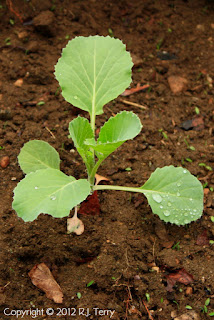

Copenhagen Market Cabbage.
Red Express Cabbage


The cabbage, broccoli, cauliflower, and kale have all been planted and are growing well under row covers. I did notice cut worm damage this morning on a couple of the cabbage plants and I am going to try the toothpick method to see if I can keep them off the plants. I started way too many seedlings as usual and still have several "extras" in the greenhouse that I can use to replace the ones that have been destroyed by pests. I would love to let the ducks roam the garden to take care of them but they would surely devour the seedlings as well! 


Overwintered leeks.


The leeks I had planted last spring were still very small by fall so last November I dug them up and transplanted them to a new bed along with some rare heirloom red onions. I covered everything with leaves and put my wire cages over them to keep the squirrels from digging them up. The leeks and onions all survived the winter and are growing strong.

Earlier in the week we harvested a couple of the larger leeks to make a delicious cream of cauliflower soup. I can't wait to make it again with fresh cauliflower from our garden!


Leeks harvest earlier this week!


Current Reading


I am currently reading All the Dirt: Reflections on Organic Farming by Rachel Fisher, Heather Stretch and Robin Tunnicliffe. It is written by three women in their 30's who have all been farming for about 10 years. They each own their own organic farm but also own Sannich Organics which sells their products along with produce from other farms. The book was written to encourage prospective farmers and provide more information about starting and running an organic farms that just isn't found in other books. So far this books does just that!

Each woman tells her story of how they got into farming and about life on each or their farms. They talk about learning through apprenticeships, taking on interns, the problems they have encountered and overcome and why they wouldn't do anything other than farming. One woman describes how she gets a feeling of rightness, and satisfaction of working her farm and how she is drawn to work that is "ecologically healthy, that involves body and mind, that harkens toward sustainability and thoughtfulness rather than blind material consumption", something that I can truly relate to. 

I am about halfway through the book and I am thoroughly enjoying it while learning alot about running an organic farm. I am passionate about organic growing and the importance of nutritious, wholesome food and this book comfirms the reasons why I want to become an organic farmer someday and makes me want to do it that much more!


Chives after an early morning rain.


Sunday, April 15, 2012

Organic Pest Control

First day outside - enjoying the sun in the mini-greenhouse.

We have a couple new additions to the garden this spring!
My wife surprised me at Easter with a pair of Pekin ducklings, something I wasn't expecting. They will be living in our garden patrolling for pests after the plants have matured and then spending the winter in the high tunnel.

I read in Eliot Coleman's books, The New Organic Grower and Four-Season Harvest that ducks make excellent pets and are better than chickens for pest control. They love potato beetles and slugs as well as other garden insects and won't destroy mature plants while feeding.


Since we got them last week they have doubled in size, it's amazing how fast they are growing. They are already starting to show their personalities, they tilt their heads when you talk to them and seem to answer back with their little chirps!

I guess my next project will be building a duck house!


The Chicken Chick


Tuesday, March 27, 2012

Seedlings in soil blocks

Butterhead lettuce in 2" soil block started 2/25.
Seeds saved from last years harvest.

Last spring I wrote about soil blocks and discussed the many benefits of using them as opposed to peat pots or plastic cell trays, but didn't have time until now to follow up and show the results.

These are pictures of plants that were started from seed between February 25th and March 7th in 3/4" soil blocks and then blocked up to 2" blocks on March 18th.

Notice the root growth in each photo. A benefit of using soil blocks is that plenty of oxygen is supplied to the roots which promotes growth. The roots will grow to the edge of the block and stop instead of getting root bound like they do in cell containers or peat pots.


Chadwick Cherry Tomato - started 3/7.

Dinosaur Kale - started 2/23.
 This year I used my own compost instead of purchasing a soil block mix as I did in the past. We had a very mild winter, but I was able to keep the compost from freezing by keeping it covered with a thick layer of leaves. The compost had hundreds of baby earth worms in it, a good sign that it was loaded with nutrients. I had very good germination rates using my own compost and the plants look very healthy.

Sweet Basil - started 2/23.

Mammouth Red Cabbage - started 3/7.


Famosa Cabbage - started 3/7.

Garlic experiment:


Last year before I harvested my garlic I let some of the scapes flower and develop bulbils which I then saved for planting. I have read that you can grow garlic from bulbils but it will take 2 to 3 seasons to form full heads of garlic. I planted some of the bulbils in 2" soil blocks to get good root systems before I plant them in the beds. As soon as it warms up a little more I will plant most of the bulbils in a bed where they will stay for the next 2 years - hopefully developing into full heads. I figure if I do this every year I will have an endless supply of garlic!


Tuesday, March 20, 2012

First Day of Spring!!


I spent this first day of spring at a greenhouse and high tunnel workshop hosted by the CTNOFA. It was held at Starlight Gardens in Durham, CT. David Zemelsky led the workshop as we toured his greenhouses and high tunnels and he shared his 13 years experience of organic growing with us.

John W. Bartlok, Jr. UConn Extension Professor Emeritus and Agricultural Engineer was also there to discuss greenhouse design and function.

What a great way to spend the first day of spring!!

Thursday, March 1, 2012

Cold Frame Plans


The plans for my mini-greenhouses (cold frames) are now available
for download on my website.

I have posted plans for both the 4' x 4' coldframe
and the 4' x 8' cold frame.

Feel free to download the plans to use to build
one for yourself.